
Lipoedema Surgery
Lipoedema treatment/Lipoedema liposuction/Lymph-sparing liposuction for lipoedema/Lipedema
What is lipoedema?
Lipoedema is a chronic condition involving an abnormal build-up of fatty tissue, most commonly affecting the legs, hips, buttocks and sometimes the arms.
It almost exclusively affects women and often develops or worsens during times of hormonal change such as puberty, pregnancy and menopause.
Lipoedema is frequently misunderstood as simple obesity or lymphoedema, however it is a distinct medical condition with characteristic symptoms and tissue changes.
Women with lipoedema often describe:
- painful or tender fatty tissue
- easy bruising
- legs or arms that continue to enlarge despite weight loss
- a disproportion between the trunk and limbs
- heaviness and swelling
- difficulty exercising or walking comfortably
- frustration after years of unsuccessful dieting attempts
- emotional distress or social withdrawal.
Importantly, lipoedema tissue is often resistant to diet and exercise alone.
As the condition progresses, secondary lymphatic dysfunction can develop. This is sometimes referred to as lipo-lymphoedema and can lead to worsening swelling, firmness and tissue fibrosis over time.
Treatment for lipoedema aims to reduce symptoms, improve mobility and function, reduce pain and heaviness, improve contour and slow progression of the condition.
Management is usually multidisciplinary and may include:
- compression therapy
- lymphatic therapy
- weight optimisation
- physiotherapy and exercise
- psychological support
- surgical treatment where appropriate.
What is lipoedema surgery?
Lipoedema surgery most commonly involves specialised liposuction techniques designed to remove lipoedema tissue while preserving as many lymphatic structures as possible.
Unlike cosmetic liposuction, surgery for lipoedema is performed with both a functional and contour-related goal.
The aim is not simply to reduce size, but to help improve:
- pain and tenderness
- heaviness and swelling
- mobility and exercise tolerance
- comfort with daily activities
- clothing fit and hygiene
- overall quality of life.
Many patients report meaningful improvements in walking, movement, exercise tolerance and confidence following treatment.
In more advanced cases, surgery may also be combined with procedures such as thigh reduction, brachioplasty or other body contouring procedures to address excess loose skin following large-volume tissue removal.
Who is suitable for lipoedema surgery?
Lipoedema surgery may be appropriate for patients with confirmed or suspected lipoedema who are experiencing pain, heaviness, swelling, progressive limb enlargement, difficulty exercising or significant impact on daily life.
It is often considered when conservative treatments are no longer adequately controlling symptoms.
Suitability for surgery depends on factors such as:
- the stage and severity of lipoedema
- skin quality
- the presence of lymphoedema
- weight stability
- mobility and general health
- overall functional status.
Factors that can affect suitability for surgery include smoking, obesity, unstable weight, poorly controlled medical conditions, poor nutritional status and significant untreated lymphoedema.
If these factors are relevant to you, the Morphē team will work with you before surgery to help optimise your preparation and recovery. This may include support from our dietitians, endocrinologist, obesity physicians, lymphatic therapists, physiotherapists or psychologist where appropriate.
Lipoedema treatment is generally most effective when surgery is part of a broader long-term management plan.
What preparation is required for lipoedema surgery?
Preparation for lipoedema surgery focuses on helping you heal well, reducing complications and supporting long-term function.
At Morphē, this may include nutritional support, weight optimisation, compression garment planning, lymphatic therapy, physiotherapy, psychological support and optimisation of underlying medical conditions before surgery.
During your consultation, Dr Alex Cameron or Dr George Balalis will assess the severity and distribution of lipoedema, skin quality, tissue fibrosis, mobility and any associated lymphatic changes to help determine the most appropriate treatment plan.
The aim is not simply tissue removal, but improving comfort, movement and quality of life over the long term.
HOW IS IT PERFORMED?
Lipoedema surgery is performed under general anaesthetic and may be undertaken as day surgery or with an overnight hospital stay, depending on the extent of treatment.
Surgery usually takes between two and six hours depending on the number of areas being treated and the severity of disease.
The procedure involves specialised liposuction techniques designed specifically for lipoedema tissue. Techniques commonly used include power-assisted liposuction (PAL), tumescent liposuction and lymphatic-sparing approaches.
Large volumes of tissue may be removed during treatment. The surgical plan is carefully designed to preserve lymphatic drainage, reduce blood loss, minimise contour irregularities and protect skin viability.
Depending on the severity of lipoedema, treatment may occur across multiple stages or procedures. In some patients, surgery may later be combined with skin reduction procedures if excess loose skin becomes problematic following volume reduction.
Drains are occasionally required depending on the extent of surgery.
Compression garments are applied immediately after surgery and form an important part of recovery. They help reduce swelling, support lymphatic drainage and reduce fluid accumulation.
Post-operative care generally includes:
- compression therapy
- lymphatic massage
- early mobilisation
- physiotherapy
- ongoing multidisciplinary follow-up.
Compression garments are usually worn continuously for at least six weeks and sometimes longer depending on disease severity.
Dr Cameron performs lipoedema surgery at Burnside Hospital, St Andrew’s Hospital or Glenelg Community Hospital.
WHAT KIND OF RECOVERY CAN I EXPECT?
Recovery following lipoedema surgery varies depending on the extent of treatment and the areas involved.
Most patients experience bruising, swelling, tissue tenderness, tightness and temporary heaviness during the early stages of recovery. These symptoms gradually improve over the following weeks.
Pain is generally manageable with simple pain relief such as paracetamol and anti-inflammatory medication, with stronger prescription pain relief used when required.
Swelling is expected after lipoedema surgery and may persist for several months, occasionally up to twelve months. This occurs because of tissue inflammation and disruption to small lymphatic structures during tissue removal.
Compression therapy, lymphatic massage, physiotherapy and early mobilisation all play an important role in recovery.
Temporary firmness or contour irregularity during healing is common and usually improves gradually over time.
The liposuction incisions themselves are small and generally heal very well. Some patients, particularly those with advanced disease or significant skin laxity, may later require skin reduction procedures that involve larger scars.
Follow-up appointments are scheduled throughout your recovery, and ongoing multidisciplinary support is often beneficial in managing lipoedema long term.
As a general guide, most patients are able to return to regular activity as follows:
- Walking and light mobilisation: encouraged early
- Gentle exercise: around 2–3 weeks
- Gym and resistance exercise: around 4–6 weeks
- Swimming: around 4–6 weeks
- Desk-based work: usually 1–3 weeks
- Physical work or lifting: usually 4–6 weeks
- Driving: usually 1–2 weeks depending on the areas treated.
ARE THERE ANY RISKS OR SIDE EFFECTS?
All surgery carries some degree of risk. These risks are reduced through careful preparation, surgical planning, post-operative care, and the experience and judgement of Dr Cameron and the Morphē team.
General risks associated with body contouring surgery will be discussed with you before your procedure.
Risks specific to lipoedema surgery may include:
- Swelling. Significant swelling is expected following surgery and may persist for months. Compression therapy and lymphatic management are important parts of recovery.
- Seroma. Fluid accumulation beneath the skin can occasionally occur and may require drainage.
- Contour irregularity. Minor irregularities or asymmetry may occur, particularly in severe fibrotic disease.
- Altered sensation. Temporary numbness or altered sensation is common and usually improves over time. Permanent sensory changes occasionally occur.
Risks specific to lipoedema surgery may include: (cont.)
- Lymphatic injury. Preservation of lymphatic structures is central to surgical technique. Persistent lymphoedema is uncommon, but possible.
- Skin laxity. Following volume reduction, loose skin may become more noticeable. Some patients subsequently require skin reduction surgery.
- Anaemia or fluid shifts. Large-volume liposuction can involve significant fluid shifts. Careful perioperative monitoring helps reduce this risk.
- Need for staged procedures. Extensive disease may require multiple surgeries to safely achieve the best possible outcome.
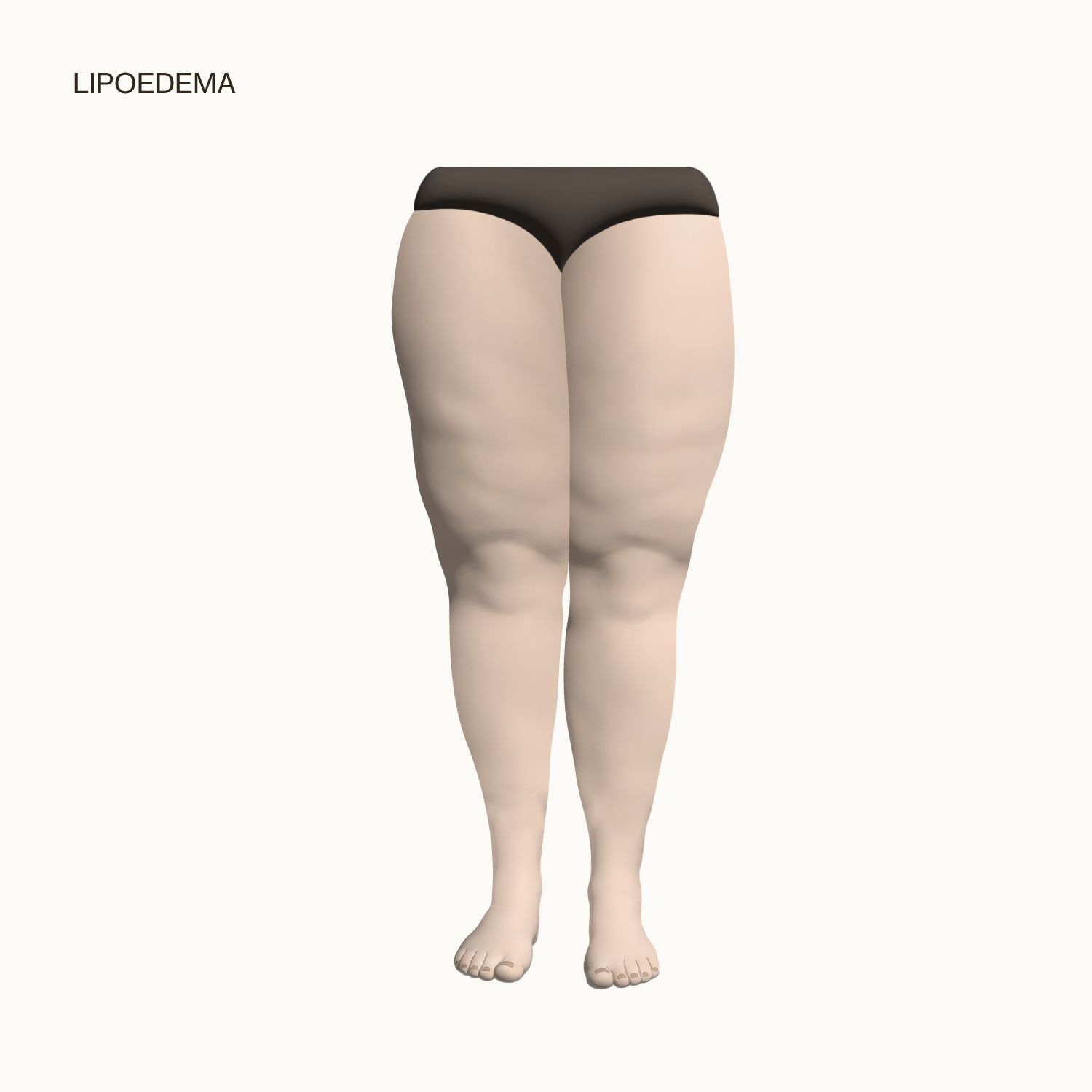
Diagram
An illustration of what Lipoedema may look like.
Contact Us
Book a consultation at Morphē Clinic to discuss your options for lipoedema treatment with Dr Alex Cameron or Dr George Balalis.