
Breast Augmentation
BREAST ENLARGEMENT/BREAST IMPLANTS
QUICK LINKS:
- What is breast augmentation?
- Who is suitable for breast augmentation?
- What preparation is required for breast augmentation?
- How is breast augmentation performed?
- What outcome can I expect to achieve?
- What kind of recovery can I expect?
- Are there any risks or potential complications?
- What are the approximate costs of breast augmentation?
What is breast augmentation?
Breast augmentation is a surgical procedure designed to increase breast volume and improve breast shape, fullness and overall body proportion.
Patients seek breast augmentation for many different reasons, including naturally smaller breast volume, breast asymmetry, loss of fullness following pregnancy or weight loss, changes related to ageing, a desire for improved upper pole (area above the nipple-areola) fullness or cleavage, or tuberous breast shape.
Breast augmentation can improve breast size, shape, projection, cleavage, symmetry and overall contour.
It is important to understand that breast augmentation primarily increases breast volume. In some patients, additional procedures such as a breast lift, fat grafting or internal support techniques may also be recommended to address skin excess, drooping or more complex shape concerns.
Dr Alex Cameron takes a highly individualised approach to breast augmentation, with the aim of achieving results that feel balanced, natural and proportionate to your anatomy and goals.
Who is suitable for breast augmentation?
Breast augmentation may be appropriate for patients who would like increased breast volume or fullness, have experienced volume loss following pregnancy or weight loss, have breast asymmetry, wish to improve breast proportion and contour, or have tuberous breast shape.
Factors which affect suitability for surgery include smoking, unstable weight, pregnancy or breastfeeding, poor nutritional status, poorly controlled medical conditions, and unrealistic expectations regarding surgery or recovery.
If these factors are relevant to you, the Morphē team will work with you to optimise your preparation for surgery. This may include support from our dietitians, endocrinologist, obesity physicians, physiotherapists or psychologist where appropriate.
Future pregnancy, breastfeeding and the long-term considerations associated with breast implants will also be discussed during consultation as part of shared decision-making.
What preparation is required for breast augmentation?
At Morphē, you will have access to a multidisciplinary team of clinicians and therapists who work together to help optimise your preparation for surgery and support the best possible outcome.
Preparation for breast augmentation will include detailed implant planning and sizing consultations, assessment of your breast tissue, skin quality and chest wall anatomy, nutritional and weight stability assessment, and psychological support if required.
During your consultation, Dr Alex Cameron will discuss your goals in detail and guide you through implant size, shape, profile and positioning options to help determine the most appropriate surgical plan for your anatomy and lifestyle.
How is breast augmentation performed?
Breast augmentation is performed under general anaesthetic as day surgery and usually takes approximately 1.5–2 hours.
The procedure involves placing a silicone breast implant to increase breast volume and improve contour. Almost all breast implants used in Australia are silicone implants. They are designed to mimic the consistency and feel of natural breast tissue and are available in a range of brands, sizes, shapes, projections and textures.
While silicone implants are considered safe medical devices, they are still a foreign material placed inside the body and can be associated with implant-related complications. All breast implants used in Australia are tracked through the Australian Breast Device Registry to support long-term safety monitoring.
During the procedure, a small incision is typically placed within the inframammary fold — the natural crease beneath the breast. Through this incision, a carefully planned pocket is created for the implant.
The most appropriate implant position depends on factors such as your existing breast tissue, skin quality, chest wall anatomy, lifestyle and desired outcome. Implants may be placed below the pectoral muscle (“dual plane”), below the fascia (“subfascial”) or below the breast tissue (“sub glandular”).
Dr Cameron currently uses both Motiva and Mentor implants. He will discuss the differences between implant types during your consultation, including the advantages, limitations and safety considerations relevant to your anatomy and goals.
In some cases, adjunctive procedures such as fat grafting, internal mesh support or simultaneous breast lift surgery may also be recommended.
The incisions are closed with layered dissolvable sutures and dressed to support healing. A surgical bra is then applied to help support the implants during the early recovery phase.
Dr Cameron performs breast augmentation procedures at Burnside Hospital, St Andrew’s Hospital or Glenelg Community Hospital.
What outcome can I expect to achieve?
Breast augmentation is highly effective at increasing breast size and fullness while improving overall breast shape and contour.
The procedure may improve upper pole fullness, cleavage, breast projection, symmetry, clothing fit and overall body proportion
Many patients also report improvements in confidence, body image and comfort in fitted clothing or swimwear.
Your final result will depend on factors such as your existing breast anatomy, skin quality, chest wall shape, implant selection and healing characteristics.
Dr Alex Cameron aims to achieve results that feel proportionate, natural and harmonious with the rest of the body.
What kind of recovery can I expect?
Recovery following breast augmentation varies between individuals, however most patients can expect swelling, tightness and discomfort for the first one to two weeks after surgery. Patients with implants placed beneath the muscle often experience more tightness during the early recovery period.
Pain is generally manageable with a combination of simple analgesics such as paracetamol and anti-inflammatory medication, with stronger prescription pain relief used when required.
A surgical bra is usually worn for approximately six weeks to reduce swelling, support healing tissues, help stabilise implant position and improve comfort.
Initially, the implants may appear higher, firmer and more projected than the final result. Over time, the implants gradually settle into a more natural position as swelling resolves and the tissues relax. This process can continue for several months. Temporary asymmetry during healing is common.
Breast augmentation scars are usually well concealed within the fold beneath the breast. Scars continue to mature over approximately twelve months and may initially appear red, firm or raised before gradually softening and fading.
We will guide you through scar care, which may include silicone therapy, scar massage, taping, sun protection and occasionally laser therapy.
A series of follow-up appointments are scheduled throughout your recovery, however Dr Cameron is happy to review you at any stage if you have concerns or would like your progress checked.
As a general guide, most patients are able to return to regular activity as follows:
- Walking: around 1 week
- Jogging: 2–4 weeks
- Gym and upper body exercise: around 6 weeks
- Swimming: around 6 weeks
- Desk-based work: usually 1–2 weeks
- Physical work or lifting: usually 4–6 weeks
- Driving: usually 1–2 weeks
Are there any risks or potential complications?
All surgery carries some degree of risk. These risks are reduced through careful preparation, surgical planning, post-operative care, and the experience and judgement of Dr Cameron and the Morphē team.
General risks associated with breast surgery will be discussed with you before your procedure.
Risks specific to breast augmentation may include:
- Scarring. Breast augmentation scars are permanent, although they are usually well concealed and fade significantly over time. Some patients may develop thickened or widened scars.
- Capsular contracture. Scar tissue naturally forms around all implants. In some patients this capsule tightens excessively, which may cause firmness, distortion or discomfort. Further surgery is occasionally required.
- Implant malposition. Implants may shift over time, including bottoming out, lateral displacement, symmastia or high-riding implants.
- Implant rupture. Modern implants are highly durable but are not lifetime devices. Monitoring and future implant surgery should be anticipated over a lifetime.
- Seroma. Fluid accumulation around the implant can occasionally occur and may require drainage or further investigation.
Risks specific to breast augmentation may include: (cont.)
- Altered sensation. Temporary changes in nipple or breast sensation are common and usually improve over 3–6 months. Permanent sensory changes occasionally occur.
- Asymmetry. Minor asymmetry is common, and pre-existing asymmetry may persist after surgery.
- Breast implant illness. Some patients attribute systemic symptoms to breast implants. Current scientific evidence remains inconclusive, however this topic is discussed openly during consultation.
- Breast Implant Associated Anaplastic Large Cell Lymphoma (BIA-ALCL). This is a rare lymphoma associated primarily with textured implants. Implant selection and current evidence regarding implant safety will be discussed during consultation.
- Need for future surgery. Breast implants should not be considered lifetime devices and most patients will require some form of implant-related surgery during their lifetime.
What are the approximate costs of breast augmentation?
Find out the approximate cost of breast augmentation here
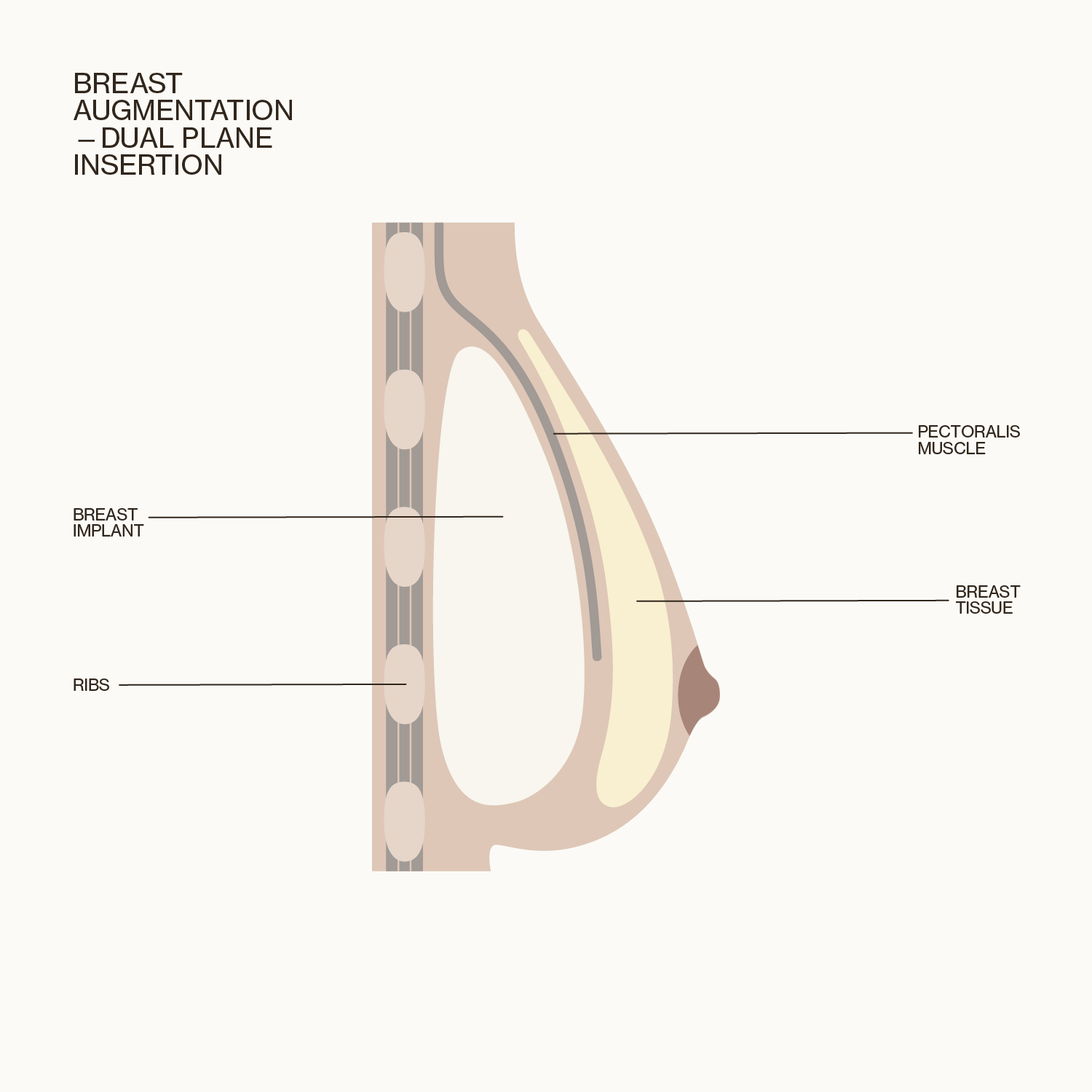
Diagram
An illustrated view of Breast Augmentation - Dual Plane Insertion
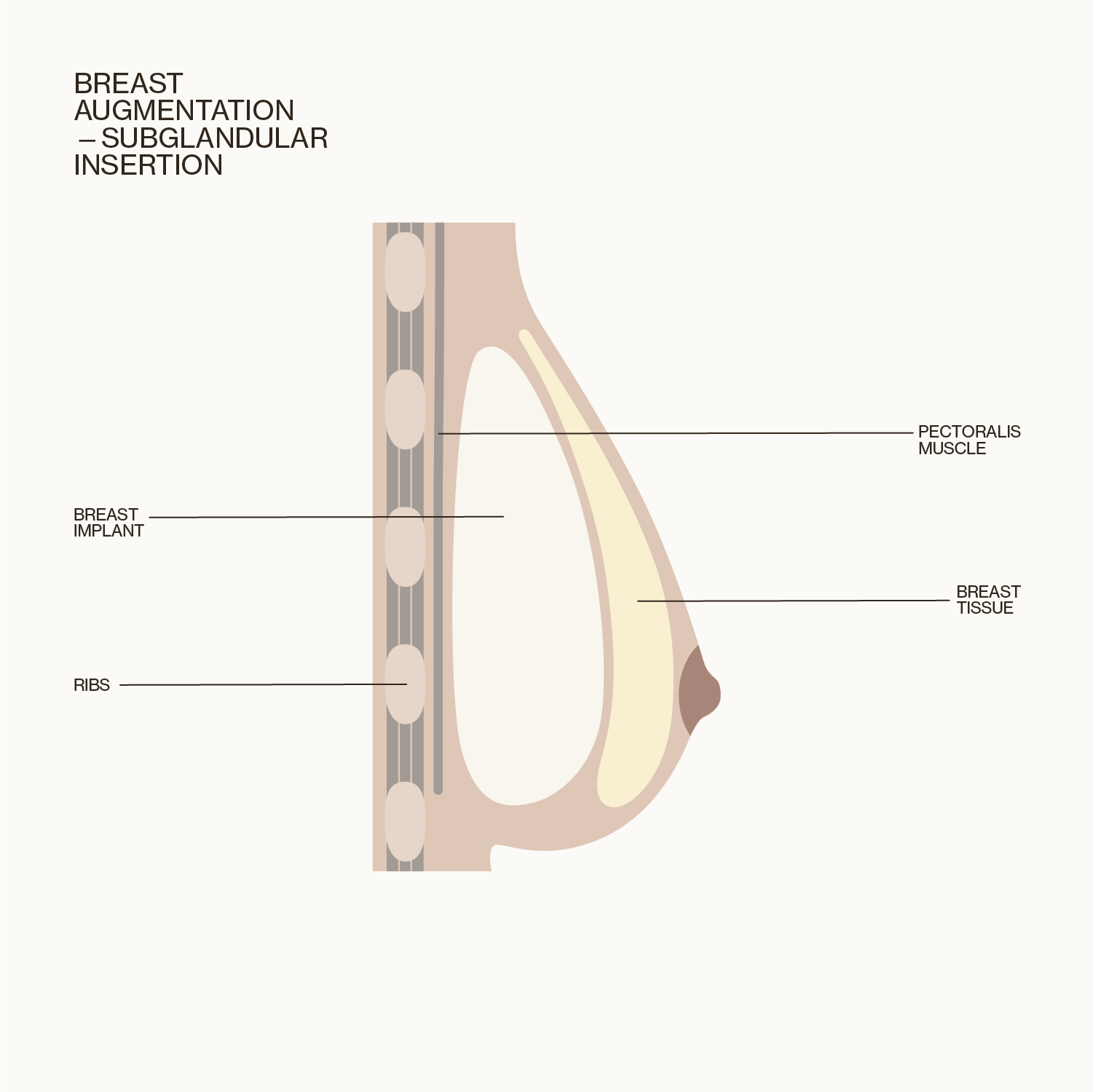
Diagram
An illustrated view of Breast Augmentation - Sub Glandular Insertion
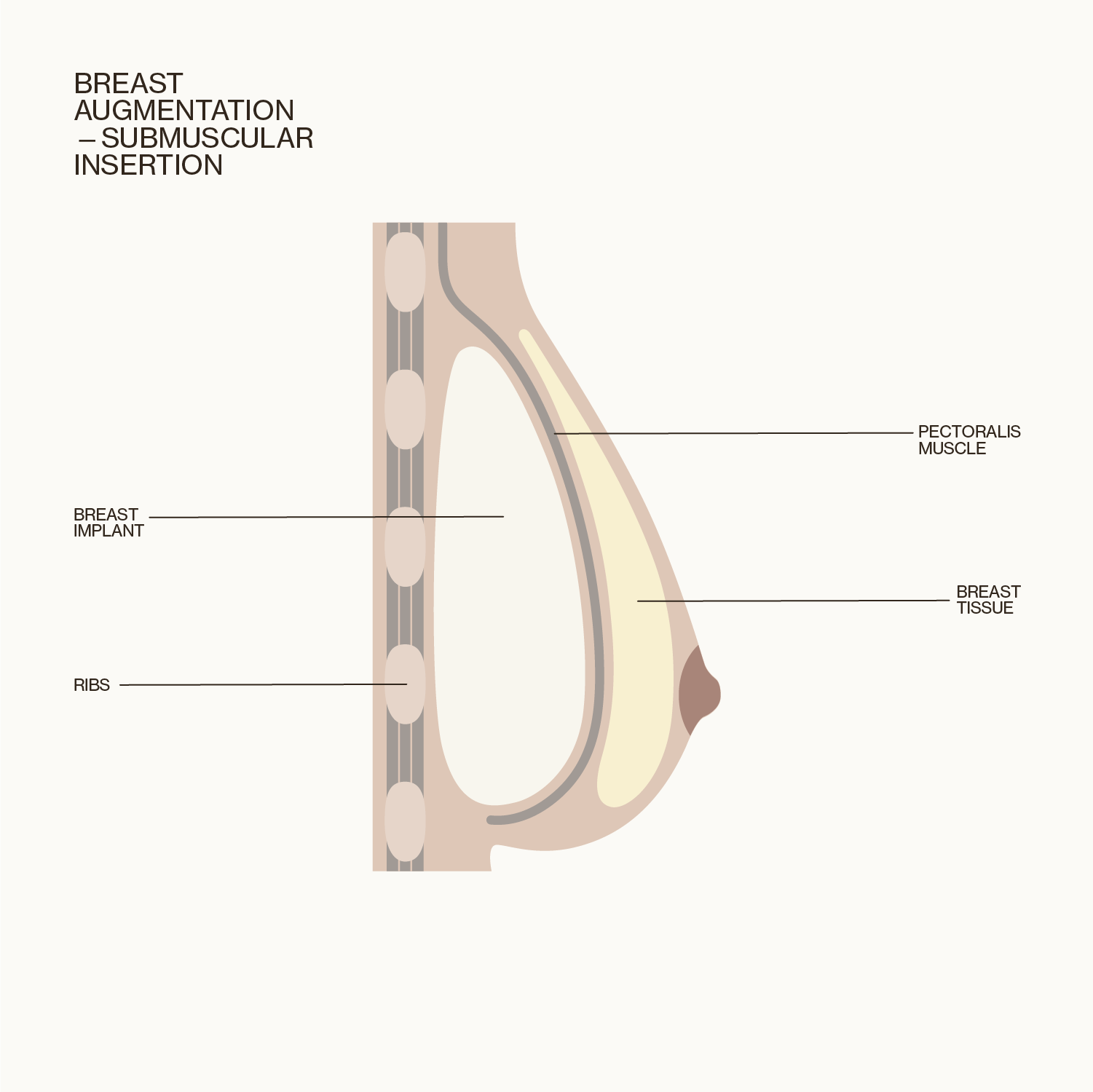
Diagram
An illustrated view of Breast Augmentation - Submuscular Insertion
Contact Us
If you’d like to discuss whether breast augmentation may be for you, schedule an appointment with Dr Alex Cameron.