
Lipoedema Surgery
Lipoedema treatment/Lipoedema liposuction/Lymph-sparing liposuction for lipoedema/Lipedema
What is lipoedema surgery?
Lipoedema is a chronic, progressive adipose tissue disorder that almost exclusively affects women. It is characterised by disproportionate, symmetrical enlargement of the legs and/or arms, often with sparing of the hands and feet. Common symptoms include pain, tenderness to touch, easy bruising, heaviness and increasing restriction in mobility.
Importantly, lipoedema is not simply obesity. The pathological fat associated with lipoedema is typically resistant to diet and exercise. Many patients report years of frustration after being advised to “lose weight,” only to find that limb disproportion and discomfort persist despite significant effort.
At Morphē Clinic, lipoedema surgery is grounded in comprehensive assessment and multidisciplinary care. Dr George Balalis and Dr Alex Cameron understand that this condition is both physical and psychological in its impact. Early recognition and referral are important, as timely intervention can significantly improve long-term outcomes and help prevent secondary lymphatic compromise.
Treatment may include conservative measures such as compression therapy, lymphatic support, structured exercise and nutritional guidance. For appropriately selected patients, specialised liposuction techniques can remove pathological adipose tissue, relieve pain and improve mobility and quality of life. Further to this, excision of the areas may also be recommended, as each patient’s condition is individualised.
HOW IS IT PERFORMED?
When surgical management is appropriate, lipoedema treatment is performed using specialised, lymph-sparing liposuction techniques designed to minimise trauma to surrounding tissues and preserve lymphatic function.
The procedure typically involves:
- Careful pre-operative planning and mapping of affected areas
- Tumescent fluid infiltration to reduce bleeding and discomfort
- Gentle, controlled removal of pathological adipose tissue
- Post-operative compression and structured recovery support.
Unlike cosmetic liposuction, the goal of lipoedema surgery is not simply contour improvement. Some patients may also benefit from skin excision, usually following liposuction, and this is carefully discussed at the outset.
The primary objectives are to reduce pain, improve mobility, decrease limb heaviness and enhance overall function.
Post-operative care is a critical component of treatment. Patients are supported with compression therapy, graduated activity and, where required, ongoing allied health input to maximise results and maintain lymphatic health.
Who is suitable for lipoedema surgery?
You may be suitable for lipoedema treatment if you:
- Have a clinical diagnosis of lipoedema
- Experience symmetrical enlargement of the limbs with sparing of the hands and feet
- Report pain, heaviness, easy bruising or tenderness in affected areas
- Have not responded to diet and exercise alone
- Experience impaired mobility or reduced quality of life due to lipoedema.
At Morphē Clinic, eligibility is determined following a thorough consultation and assessment. Patients undergo coordinated evaluation, including input from a specialist occupational therapist and dietitian and optimisation of conservative measures such as compression therapy, exercise and lymphatic support.
Surgery is not appropriate for every patient with lipoedema. The decision is made carefully, with a focus on long-term health, function and safety.
ARE THERE ANY RISKS OR SIDE EFFECTS?
As with any surgical procedure, lipoedema surgery carries potential risks. These may include:
- Bruising and swelling
- Temporary numbness or altered sensation
- Fluid accumulation (seroma), or lymphoedema
- Infection
- Contour irregularities
- Anaesthetic-related risks.
Careful patient selection, meticulous technique and structured follow-up significantly reduce the likelihood of complications. During your consultation, Dr George Balalis and Dr Alex Cameron will discuss risks in detail and provide clear guidance tailored to your individual circumstances.
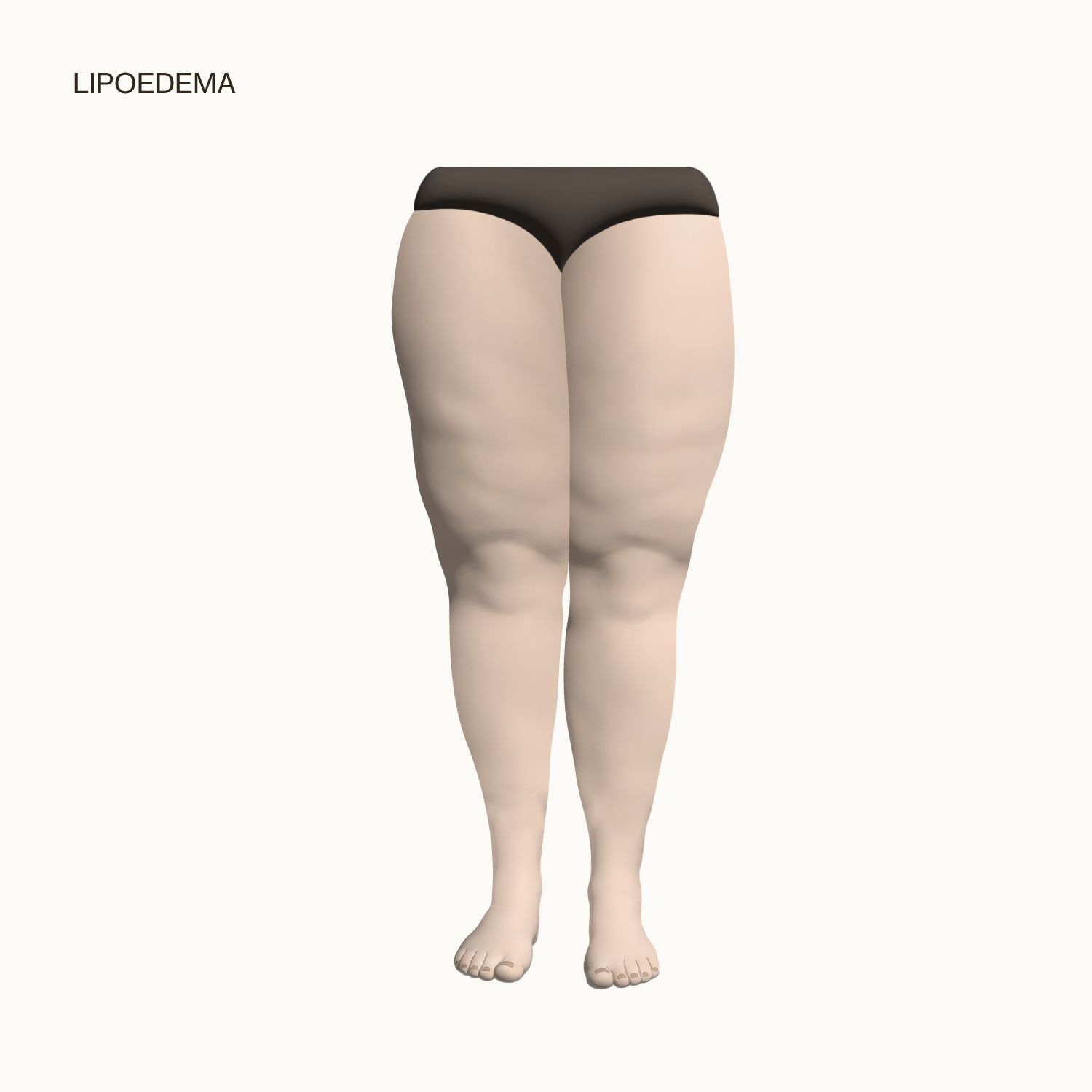
Diagram
An illustration of what Lipoedema may look like.
Contact Us
Book a consultation at Morphē Clinic to discuss your options for lipoedema treatment with Dr George Balalis and Dr Alex Cameron.